
Which Enterprise do you Work for?
If you pose that simple question to someone in employment, they will probably name the organisation that pays their wages. The problem with the term ‘enterprise’, however, is that it can mean different things to different people. It can be used as just another word for a business, or more specifically a legal entity with the right to conduct business. Or it might refer to a large scale project or venture that involves a significant amount of initiative and risk. Does this lack of precision matter? We think it certainly does, if you are a serious enterprise architect.
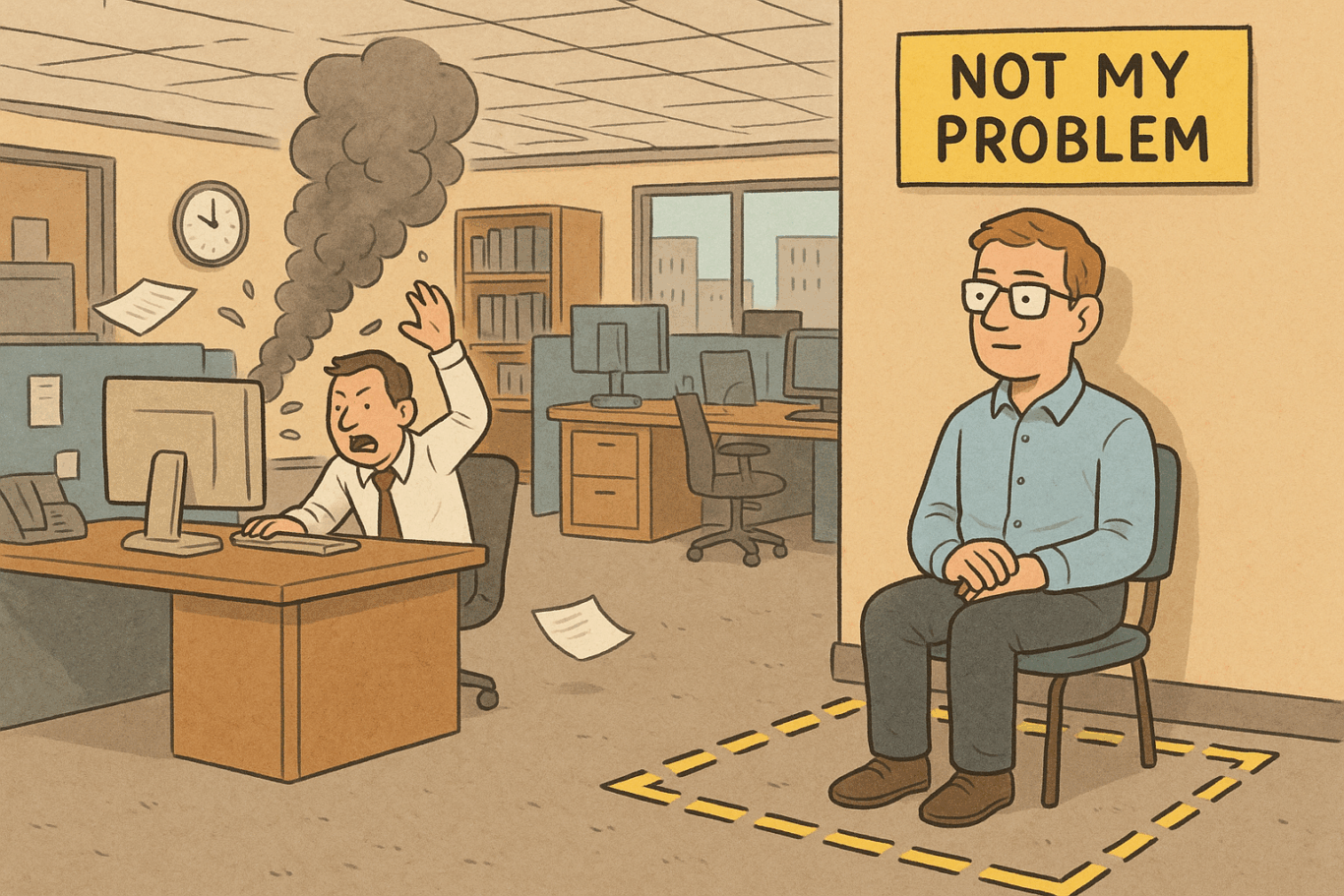
We often come across enterprise architects who believe that the scope of their responsibilities stops at the legal boundary of their home organisation. For them, whatever happens outside this boundary is someone else’s problem. This limited view ignores the fact that virtually all modern organisations rely on a network of externally provided business services, some of which are critical to their success and, in many cases, to their economic survival. We believe a responsible enterprise architect needs to take account of this broader view of the enterprise with particular focus on business vulnerabilities.
Manufacturing businesses in the aerospace and automotive sectors are prime examples of such extended enterprises. The vulnerability of their complex supply chains has been highlighted by such incidents as the 2011 Japanese earthquake that disrupted the world-wide vehicle production lines of Nissan and Honda. Experiences such as this called into question the wisdom of total reliance on the efficient ‘Just in Time’ and ‘Lean’ production methods that became the norm for such businesses in the latter part of the twentieth century.
Current Threats
Today, the main threat to such business models is not so much from natural disasters as from malicious cyber attacks. Consider, for example, the recent case of the UK’s largest automotive company Jaguar Land Rover (JLR), whose entire operation was forced to shut down for several weeks because of a cyber attack. The JLR company itself sits at the heart of an elaborate network of suppliers and dealers, all of whom have suffered significant losses because of the shutdown. The estimated total costs for JLR’s extended enterprise are around £2 billion.
No business sector is immune from the risks involved in organisations losing awareness and control of their extended enterprises. A few years ago the British Government’s Financial Conduct Authority (FCA) conducted a review of the use of outsourcing providers by firms in the UK’s Financial Asset Management industry. The review confirmed that several of these firms had outsourced critical business processes to external suppliers without putting in place contingency plans in the event of the service provider’s failure. Another major concern was the asset managers’ lack of adequate oversight of their outsourcing partners’ activities, despite the fact that they had regulatory responsibility for ensuring the processes were properly managed with due attention to vital matters such as client data privacy. In some cases the outsourced processes were handled offshore, and this was seen by the FCA to compound the risks.
Why Extended Architecture Matters
The FCA’s damning review provided a wake-up call to the asset management industry, and the affected firms immediately scrambled to put stronger governance mechanisms in place and to develop better fall-back plans. To be effective, however, these needed to be supported by detailed knowledge of the organisational assets transferred to the outsourcing firms – in short, the enterprise architecture. Without this information and the skills of an enterprise architect, it would be impossible to check and correct the activities of an outsourcing partner. In the event of the failure of an outsourcing arrangement, it would also be difficult to bring the processes back in house or to move the business processes to a different service provider.
In a previous blog we discussed how Apple had managed earlier this year to rapidly reconfigure the hugely complex global supply chain of its iPhone product in response to the US Government’s draconian tariff policies. The company could only have achieved this level of agility with detailed knowledge and control of its extended enterprise. Few organisations are likely to have the resources to emulate this kind of response to a major crisis. Nevertheless, all enterprise architects need to take account of critical business and IT services outside the direct control of their home base, to assess and flag any vulnerabilities, and to provide EA support for appropriate remedial measures.